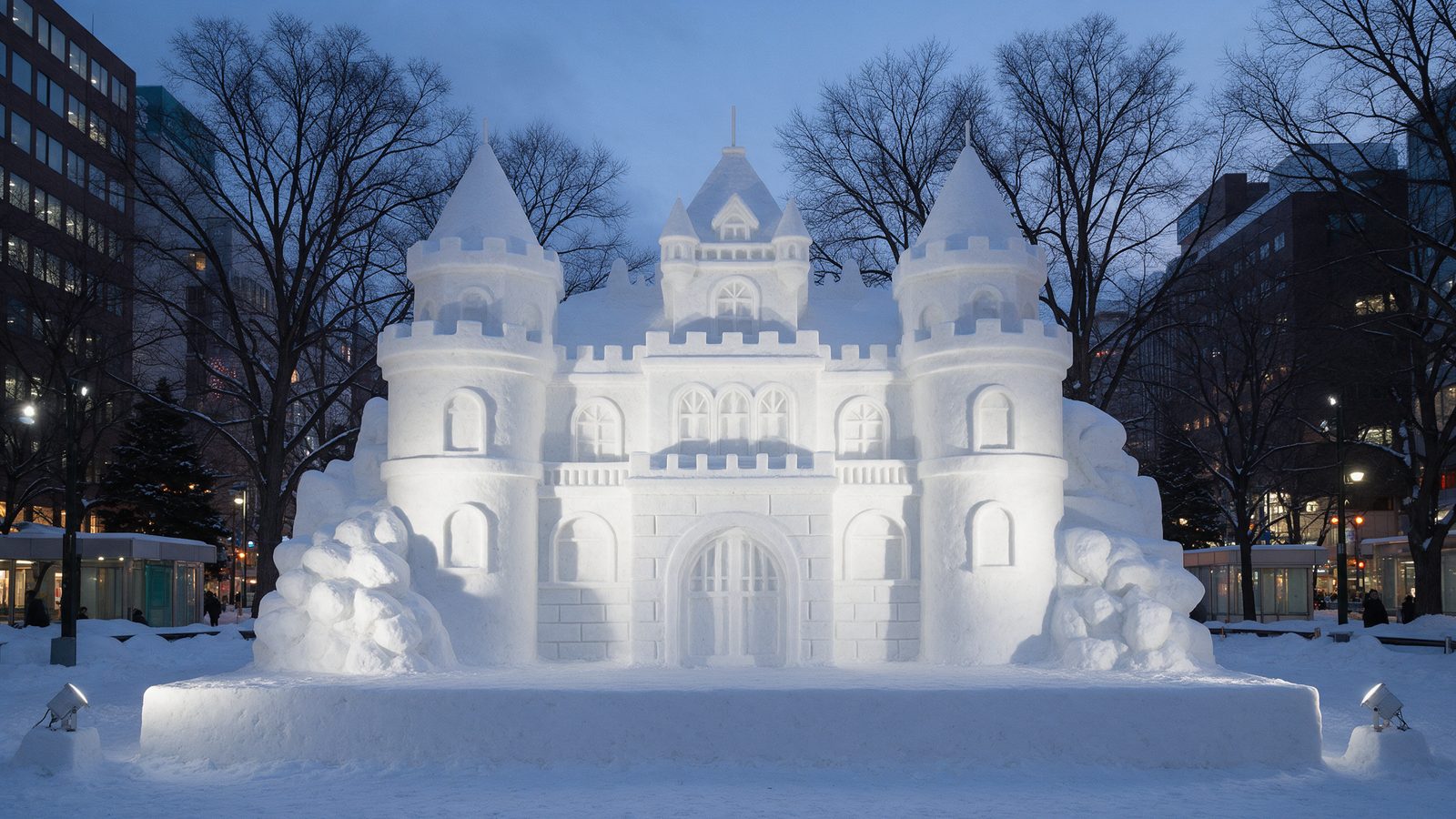


Japan's winter festival season runs roughly from mid-January to late February, and it solves a problem most agents have: what to sell clients who want Japan in winter but do not ski. The snow-country events are genuinely spectacular, heavily attended by domestic travellers, and concentrated in exactly the northern regions that are otherwise a hard sell in February. They also have the tightest accommodation of any period in the Japanese calendar outside Golden Week and New Year.
The headline events
Sapporo Snow Festival (Hokkaido, early February, about one week). The largest and best known — several hundred snow and ice sculptures across Odori Park and two other sites, including large-scale carvings built by teams over weeks. Attendance runs into the millions. It is genuinely impressive and genuinely crowded, and Sapporo hotel rates roughly double for the duration.
Otaru Snow Light Path (Hokkaido, February, about ten days, overlapping Sapporo). Quieter and, for many clients, more affecting: candle lanterns in snow hollows along the canal and old streets after dark. Forty minutes from Sapporo, which makes it the obvious pairing.
Yokote Kamakura Festival (Akita, mid-February, two days). Hundreds of kamakura — domed snow huts, each with a small altar and a brazier — lit from within, with children inviting visitors in for sweet rice wine and rice cakes. Small, old, and much less international than Sapporo.
Nozawa Onsen Fire Festival (Nagano, 15 January, one night). A serious event: villagers defend a wooden shrine structure against torch-bearing attackers, and it burns at the end. Loud, hot, crowded and unforgettable. Not suitable for small children or anyone unsteady on their feet.
Zao and Hakkoda snow monsters (Yamagata / Aomori, late January to early March). Not a festival but a phenomenon — trees encased in rime ice into strange frozen figures, lit at night and reached by ropeway. Pairs naturally with the Tohoku circuit.

Lead times, honestly
This is the part that catches agents out.
- Sapporo during the Snow Festival needs booking eight to twelve months ahead. Not "ideally". Practically. Hotels sell out, and what remains sells at multiples of the shoulder rate.
- Yokote has very little accommodation. Most visitors stay in Akita city or Yuzawa and travel in. Trying to sleep in Yokote itself is usually the wrong plan.
- Nozawa on 15 January is fully booked well in advance, and the village is small. Clients will be walking in snow, at night, in a crowd.
- Dates move. Most of these events are fixed to a rough window rather than exact dates, and several are confirmed only a few months out. Never publish exact dates to a client without checking the current year.
The weather brief clients actually need
Northern Japan in February is cold in a way that many source markets underestimate — Hokkaido and inland Tohoku regularly sit well below freezing, with wind and lying snow.
- Proper footwear with grip, not fashion boots. Ice on pavements causes more trip cancellations than snow does.
- Layers, gloves, hat. Outdoor festival attendance means standing still, outdoors, at night.
- Transport disruption is normal. Snow delays trains and closes roads in Hokkaido and Tohoku most winters. Build slack into transfers and never schedule a same-day connection to an international departure.
- Daylight is short. Most of these events are after dark, which is convenient — it leaves daytime free.
Our weather and disruption planning guide covers how we build contingency into winter programmes.

Building the trip around it
A festival alone does not fill a week. What works is treating the event as one fixed evening and building a circuit around it:
- Hokkaido: Sapporo for the festival, Otaru for the lanterns, an onsen night at Noboribetsu or Jozankei, and either Niseko for snow or Asahikawa for the winter zoo. Our Hokkaido tours guide has the wider picture.
- Tohoku: Sendai as the base, Yokote for the kamakura, Zao for the snow monsters, and Ginzan or Nyuto for onsen. Slower, colder, far fewer international visitors.
- Nagano: Nozawa for the fire festival, Jigokudani for the snow monkeys, Matsumoto for the castle in snow.
How a Japan DMC handles it
The value we add here is inventory and timing. We hold winter allocation in the towns that matter, confirm event dates as they are published rather than repeating last year's, and build transfers with enough slack that a snow delay does not cascade. We also tell agents plainly when a request has come too late — a client asking in November for Sapporo in February is usually better served by Otaru, Tohoku or a different week, and saying so early is more useful than quoting something that will not hold.
FAQ
When is the Sapporo Snow Festival? Early February, running about a week. Exact dates are confirmed each year and should be checked rather than assumed. Sapporo accommodation for that week needs booking eight to twelve months ahead, and rates rise sharply.
What is the Yokote Kamakura Festival? A two-day festival in mid-February in Akita Prefecture where hundreds of domed snow huts (kamakura) are built and lit from within, with children inside offering sweet rice wine and rice cakes to visitors. It is far smaller and less international than Sapporo. Most visitors stay in Akita city or Yuzawa, as Yokote itself has very limited accommodation.
Are Japan's winter festivals suitable for families? Mostly yes — Sapporo, Otaru and Yokote all work well with children, given proper cold-weather clothing. The Nozawa Onsen Fire Festival is the exception: it involves fire, large crowds and a lot of noise at night, and is not suitable for small children or anyone unsteady on their feet.
How cold does it get? Hokkaido and inland Tohoku sit regularly below freezing in February, with wind, lying snow and icy pavements. Since most festival events happen outdoors after dark, clients need real winter layers, gloves, a hat and boots with grip — not fashion footwear.
Planning winter Japan for next season? Book the festival weeks early — write to b2b@explera.jp, message the trade desk on WhatsApp at +66 93 656 8090, or register on the B2B portal. Proposals within 24 hours. IATA 96215733, ASTA member 900408341.