
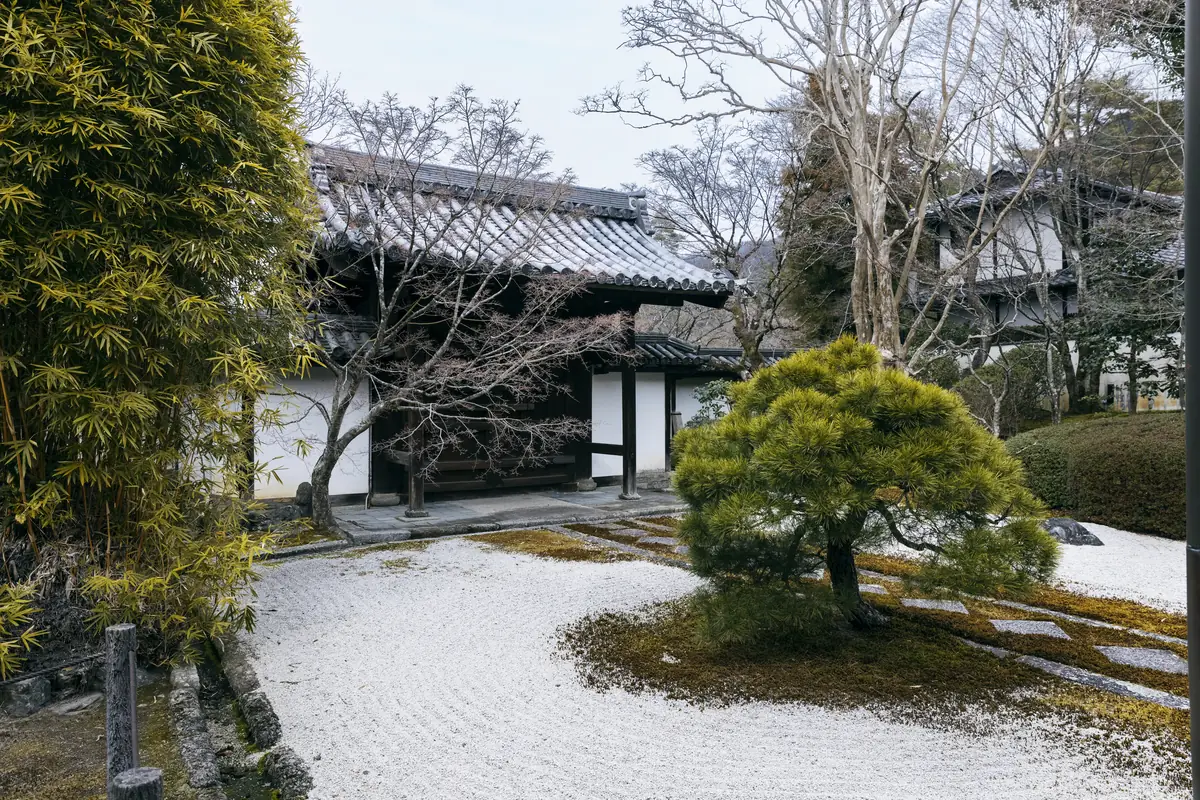
Kyoto has more Zen temple gardens than any other city in Japan, and many are dry gardens of raked gravel, rocks and moss, made to be looked at from a veranda rather than walked through. They are small, quiet and best seen slowly. Seven are described here; two or three in a day is plenty.
Seven gardens
- Ryoan-ji. The most famous rock garden in Japan: fifteen stones in a rectangle of white gravel. From any one spot at least one stone is hidden.
- Daitoku-ji. A large Zen complex in the north with many small sub-temples. Daisen-in and Ryogen-in have tiny, intense gardens, and far fewer visitors than Ryoan-ji.
- Tofuku-ji. Four modern gardens made in 1939 around the abbot's hall, including a chequerboard of moss and stone. The temple is also famous for autumn leaves.
- Kennin-ji. Kyoto's oldest Zen temple, a few minutes from Gion, with several gardens and a painted dragon ceiling.
- Nanzen-ji. The abbot's garden here is a classic composition of rocks and clipped shrubs against a wall.
- Ginkaku-ji. The Silver Pavilion, known for a cone of white sand and a moss garden on the hillside.
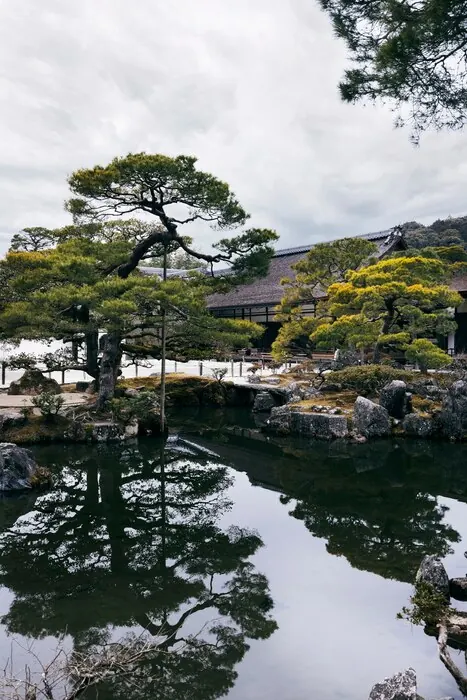
- Tenryu-ji. A pond garden in Arashiyama that borrows the hills beyond as its backdrop.

How to look
Sit down. The gardens are designed to be viewed from the edge of the wooden veranda, and the longer you stay, the more you notice: the raked lines, the shadows, the way moss holds the stones. There is no single correct meaning, and guides will offer several.
Tips
- Go early or late. Ryoan-ji opens in the early morning and is quiet for the first hour.
- Choose by area. Ryoan-ji pairs with the Golden Pavilion; Kennin-ji with Gion; Tofuku-ji with Fushimi Inari; Tenryu-ji with Arashiyama.
- Rain is fine. Moss and wet stone look their best on a grey day.
- Try sitting meditation. Several temples offer short zazen sessions for visitors; see our guide to Zen retreats and zazen.
For gardens beyond Kyoto, see our Japan garden tours guide.
FAQ
What is the most famous Zen garden in Kyoto? The rock garden of Ryoan-ji, with fifteen stones set in raked white gravel.
What is a dry garden? A garden made of gravel, rocks and moss, with no pond. In Japanese it is called karesansui.
How many gardens can I see in a day? Two or three, grouped by area, with time to sit at each.
When is the best time to see Kyoto's gardens? They are open all year. Autumn colour in late November and fresh green in May are the most popular times.
Planning Kyoto for yourself, your family or your clients? Write to b2b@explera.jp or message us on WhatsApp at +66 93 656 8090 with your dates and group size, and we will reply within 24 hours. Explera is a destination management company for Japan — IATA TIDS 96215733, ASTA member 900408341.