

Japan's summer festival season — roughly July through August — is one of the most vibrant, distinctive and photogenic periods of the Japanese calendar. Agents who sell Japan in summer are often pleasantly surprised by the richness of the experience; while cherry blossom in spring gets the marketing attention, matsuri season delivers something equally powerful and considerably less crowded.
The major summer festivals
Tanabata (Star Festival) — early July Based on a folktale about two star-crossed celestial lovers (Vega and Altair) who meet once a year across the Milky Way. Cities across Japan hang enormous bamboo streamers (kazari) and paper decorations. The most celebrated Tanabata is in Sendai, held a month later on 6–8 August under the old calendar, where the city centre is transformed with six-metre paper and bamboo constructions. Hiratsuka (Kanagawa) runs the largest July Tanabata near Tokyo.
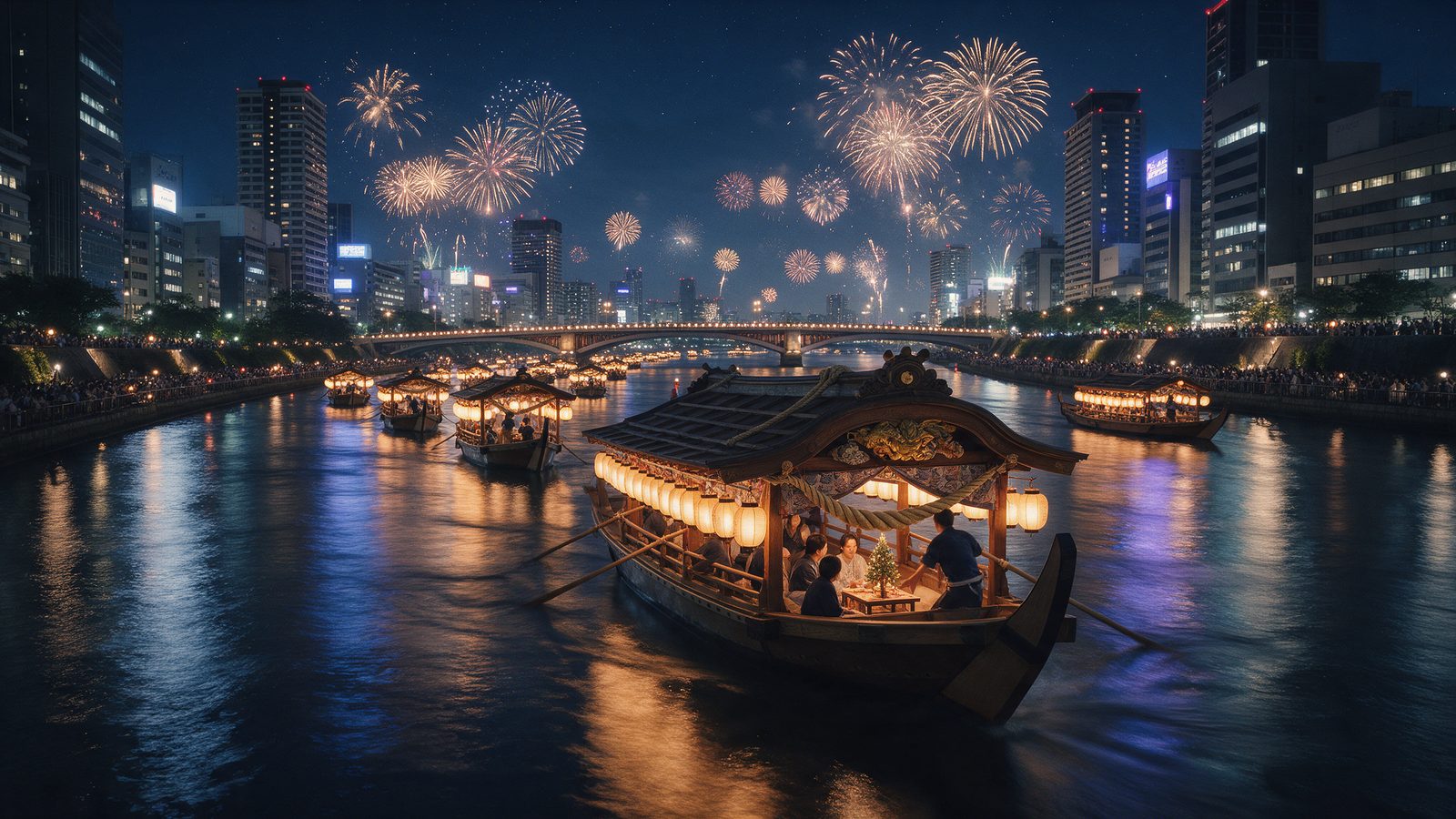
Tenjin Matsuri (Osaka) — 24–25 July One of Japan's three great festivals, dating to 949 CE. The climax on 25 July is a procession of 100 boats on the Okawa River at dusk, illuminated by 5,000 lanterns and 4,000 fireworks launched over the water. One of the most spectacular festival nights in all of Japan.
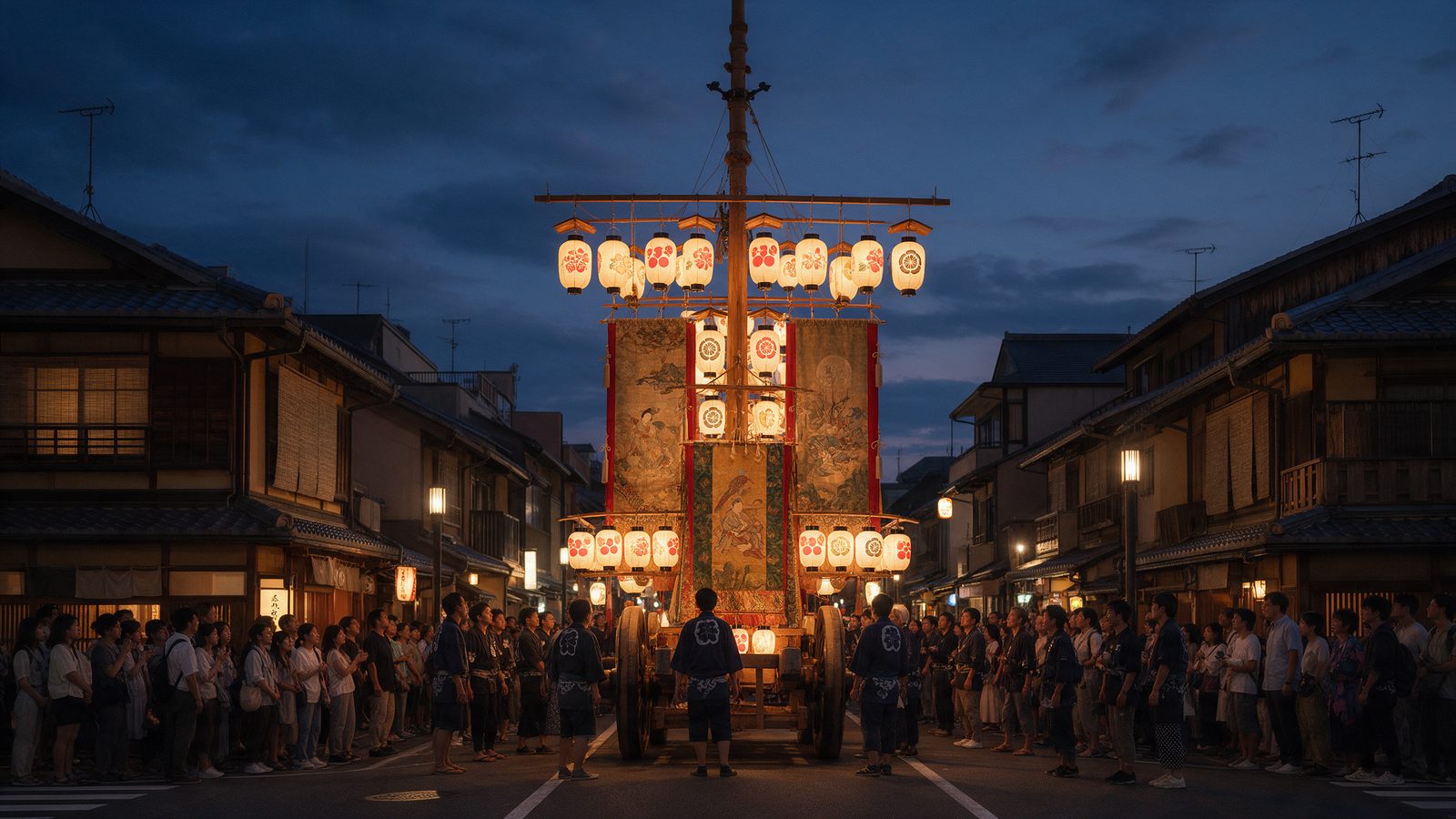
Gion Matsuri (Kyoto) — throughout July The Gion Matsuri is the grandest of Japan's ancient festivals, celebrating since 869 CE. The main procession (Yamaboko Junko) of elaborate decorated floats (yamaboko) takes place on 17 July and again on 24 July. The Yoiyama evenings (14–16 July and 21–23 July) fill Kyoto's historic streets with lantern-lit floats and vendors; arguably the atmosphere is better than the parade itself.
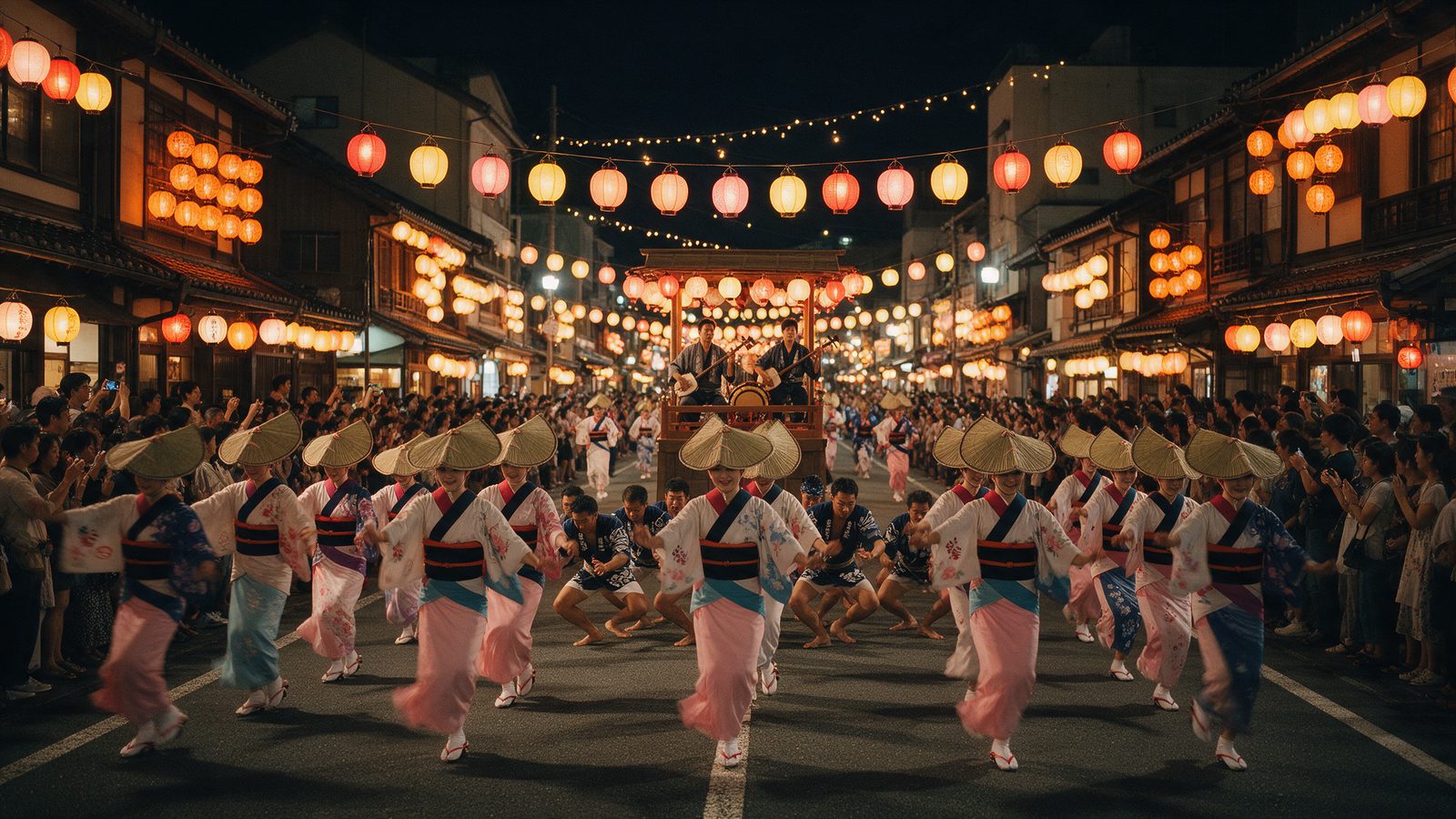
Awa Odori (Tokushima) — 12–15 August The most energetic of Japan's dance festivals: 1.3 million spectators watching thousands of performers in cotton yukata dancing through the city streets to shamisen, taiko drums and flutes. The chant goes: "The dancing fool and the watching fool are both fools — so why not dance?" Contagiously joyful. Travel from Osaka in 2 hours.
Obon — mid August Obon is the Buddhist festival of the dead — three or four days when ancestral spirits are believed to return. It is observed with temple visits, lantern floating (toro nagashi) on rivers and the sea, and the circular bon odori dance performed in temple courtyards. Every town and neighbourhood holds its own event; for groups it works best experienced in a rural or smaller-city context where the community participation is more visible.
Fireworks (Hanabi) festivals — July and August Japan's summer is punctuated by fireworks displays of extraordinary scale and artistry. Major events: - Sumida River Fireworks (Tokyo, last Saturday of July) — approximately 20,000 shells fired from two launch sites. - Nagaoka Fireworks (Niigata, 2–3 August) — considered Japan's most technically sophisticated; Phoenix fireworks spread 2km across the sky.

How to build matsuri into an itinerary
- Gion Matsuri + Kyoto base: A Kyoto stay in the first three weeks of July captures both the Yoiyama evenings and the main procession. Layer onto a golden route program.
- Tenjin Matsuri from Osaka: The festival climax is on 25 July; a one-night extension in Osaka after the golden route catches it perfectly.
- Awa Odori day trip from Osaka: The festival runs 12–15 August; a 2-hour limited-express train makes it a feasible day trip or single-night add-on.
- Sendai Tanabata: Pair with a Tohoku cultural program or use Sendai as a Shinkansen stop on a longer north–south journey.

Practical notes for agents
- Fireworks and major festival nights require accommodation booked many months ahead — street crowds are enormous.
- Traditional cotton yukata rental is available for groups at most major festival cities; Explera arranges dressing sessions and guided evening walks.
- Matsuri season overlaps with Japan's school summer holiday (mid-July to late August); popular sites and transport are busier than usual. Guides and private transfers reduce crowd friction.
FAQ
When does the summer festival season run in Japan? Matsuri season runs roughly from July through August. It includes Gion Matsuri throughout July in Kyoto, Tenjin Matsuri in Osaka on 24 and 25 July, Awa Odori in Tokushima from 12 to 15 August, Obon in mid August and major fireworks festivals.
How can agents add Gion Matsuri to a golden route itinerary? Base clients in Kyoto during the first three weeks of July to capture both the Yoiyama evenings and the main Yamaboko Junko procession on 17 July. The Yoiyama evenings fill Kyoto's historic streets with lantern-lit floats, and the atmosphere is arguably better than the parade itself.
How far ahead should accommodation be booked for Japanese festival nights? Fireworks and major festival nights need accommodation booked many months ahead because street crowds are enormous. Matsuri season also overlaps with Japan's school summer holiday, so guides and private transfers help reduce crowd friction for groups.
Summer programs quoted with matsuri inclusions; proposals within 24 hours. Send RFQs to b2b@explera.jp, WhatsApp +66 93 656 8090, or the B2B portal. IATA 96215733, ASTA member 900408341.