

Japan in winter is one of the most atmospheric — and most undersold — versions of the country. Agents tend to think of Japan's winter as a ski product, and the powder is world-class, but December to February is equally strong for culture-focused clients who never touch a slope: snow-dusted temples without the crowds, wild monkeys bathing in hot springs, ice festivals on a spectacular scale, and the singular pleasure of an open-air onsen while snow falls. Here is the non-ski winter Japan product.
The Jigokudani snow monkeys
The Japanese macaques of Jigokudani Monkey Park in Nagano Prefecture — wild monkeys that descend from the cliffs to soak in a natural hot-spring pool, faces dusted with snow — are one of the most photographed wildlife scenes on earth. The park is reached by a 30-minute forest walk from the road head; monkeys bathe most reliably December through March, when the cold drives them to the water.
Program it as a day trip from Tokyo (90 minutes by Hokuriku Shinkansen to Nagano, then private transfer) or as an overnight pairing with Zenko-ji, Nagano's great 7th-century temple, and a stay in the onsen town of Yudanaka or Shibu — where clients bathe in the same volcanic waters as the monkeys, in considerably more comfort.

Sapporo Snow Festival and Hokkaido winter
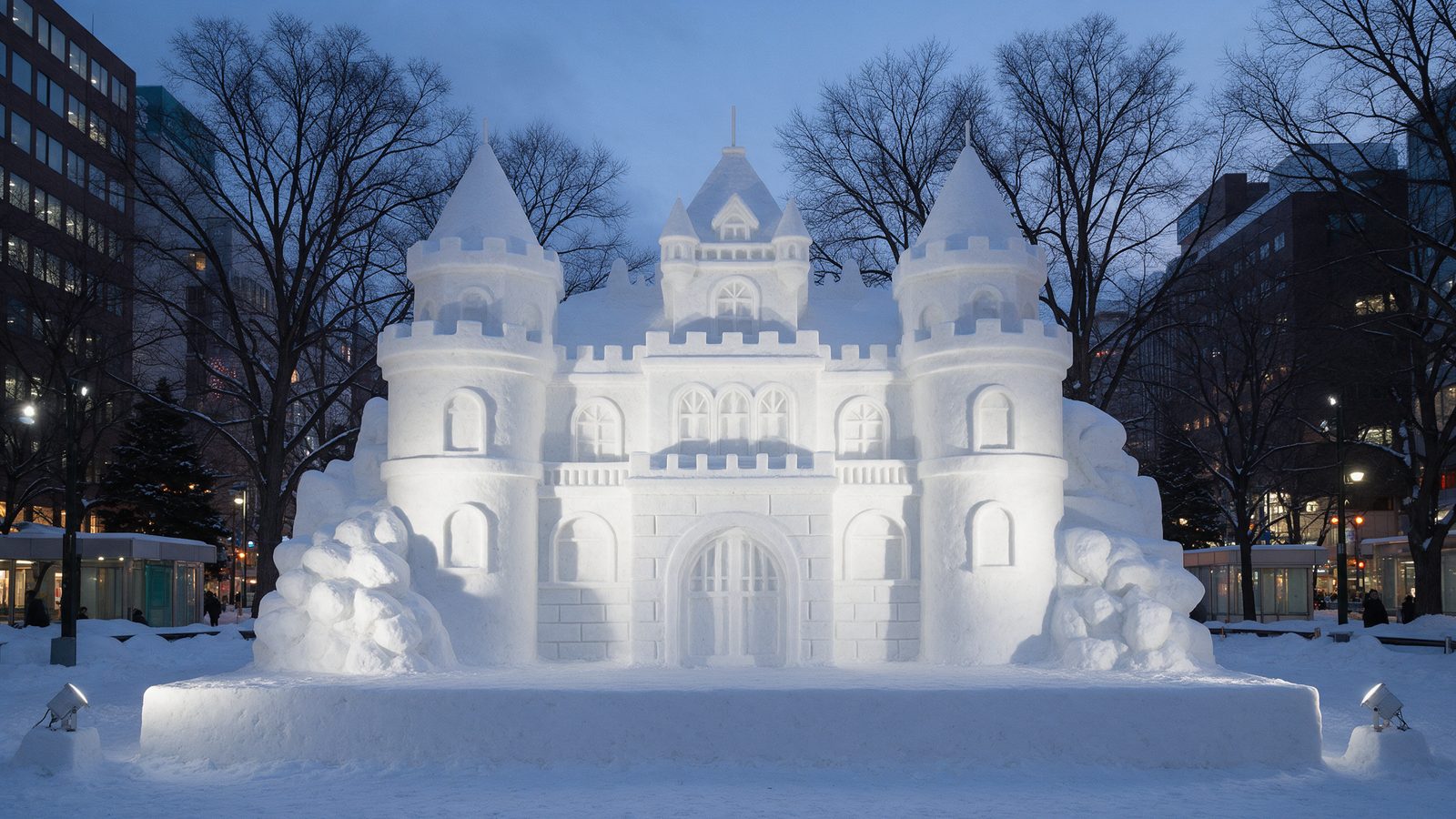
Each February, Sapporo's Odori Park fills with massive snow sculptures — buildings, characters and scenes carved at architectural scale — for the Sapporo Snow Festival (Yuki Matsuri), drawing about two million visitors over one week. Pair it with the ice sculptures of the Susukino site and the citywide food scene (miso ramen, soup curry, Hokkaido crab).
Beyond Sapporo: Otaru's Snow Light Path (canal-side lanterns in the snow), drift-ice walking on the Okhotsk Sea coast at Abashiri, and the red-crowned cranes dancing in the snowfields of Kushiro. See the Hokkaido group tours guide for logistics.
Winter illuminations
Japan takes winter lights seriously. The best displays run November through February:
- Nabana no Sato (Mie, near Nagoya) — Japan's largest illumination; tunnels of millions of LEDs.
- Kobe Luminarie — a memorial illumination of cathedral-like light structures.
- Tokyo — Marunouchi, Roppongi and Yebisu Garden Place all run elegant displays; easily woven into any Tokyo evening.

Onsen in the snow
Winter is when Japan's hot-spring culture makes complete sense. The defining experience — an outdoor bath (rotenburo) in falling snow — is at its best in:
- Kinosaki Onsen — the willow-lined onsen town on the Sea of Japan coast; snow country from January, plus peak snow-crab season.
- Nyuto Onsen (Akita) — rustic, centuries-old bathhouses deep in beech forest; the classic "secret onsen" of northern Japan.
- Shirakawa-go — the UNESCO thatched-roof village in the Japan Alps under two metres of snow, with light-up evenings in January and February.
Why winter works for agents
- Availability and price — outside New Year week and the Sapporo festival, December–February is low season for cultural Japan: better hotel rates, no queues at Kyoto's temples, and easy restaurant bookings.
- Weather — Pacific-side cities (Tokyo, Kyoto, Osaka) are cold but dry and often brilliantly sunny; snow is a day trip away rather than a daily obstacle.
- Distinct product — a winter itinerary photographs and sells completely differently from the spring and autumn standards; strong for repeat-Japan clients.
FAQ
When do the Jigokudani snow monkeys bathe most reliably? The monkeys bathe most reliably from December through March, when the cold drives them to the hot-spring pool. The park is a 30-minute forest walk from the road head and works as a day trip from Tokyo or an overnight with Zenko-ji and an onsen stay in Yudanaka or Shibu.
Is winter in Japan a good season for clients who do not ski? Yes. December to February suits culture-focused clients: snow-dusted temples without crowds, snow monkeys, ice festivals and open-air onsen in falling snow. Outside New Year week and the Sapporo festival it is low season for cultural Japan, with better hotel rates and easy restaurant bookings.
What does a 10-night winter itinerary in Japan look like? A classic 10-night winter programme runs Tokyo for three nights, Nagano for the snow monkeys and Zenko-ji for one, Kanazawa and Shirakawa-go for two, Kyoto for three and Osaka for one. Pacific-side cities are cold but dry and often sunny, with snow a day trip away.
A classic 10-night winter program: Tokyo (3) → Nagano snow monkeys and Zenko-ji (1) → Kanazawa and Shirakawa-go (2) → Kyoto (3) → Osaka (1). Net rates in 14 currencies, proposals within 24 hours — b2b@explera.jp, WhatsApp +66 93 656 8090, or the B2B portal. IATA 96215733, ASTA member 900408341.