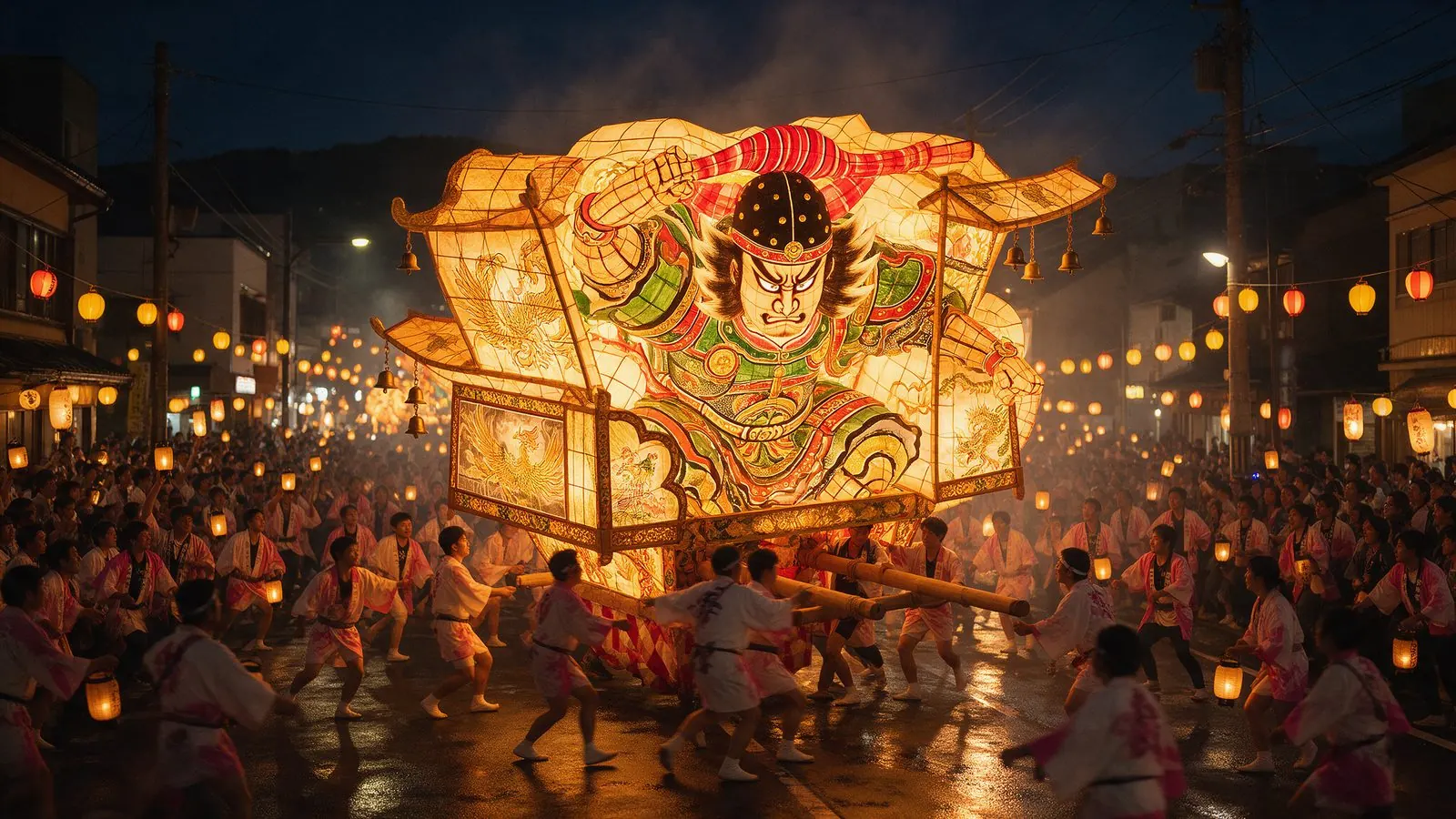


Aomori sits at the top of Honshu, two and a half hours from Tokyo on the Hayabusa and almost entirely absent from foreign itineraries. That gap is the opportunity. The prefecture holds the loudest festival in Japan, the single most photographed castle-and-cherry composition in the country, a gorge walk that reads like a Studio Ghibli location, and apple orchards that supply half the national crop. For agents whose clients have done the Golden Route and want the next thing, Aomori is a stronger answer than another Kyoto district.
Hirosaki: the castle everyone has seen and nobody has visited
Hirosaki Castle's moat, filled edge to edge with fallen petals until the water disappears under pink, is the image that sells Japanese spring — it appears in more brochures than any other blossom shot. Almost none of the groups looking at that brochure ever stand there.
- The bloom runs late, typically from the last week of April into the first week of May, which is the point: Hirosaki gives you a cherry blossom product after Kyoto and Tokyo have finished. A file that missed the Kansai window can still be sold a real hanami.
- Golden Week collides with it. Domestic demand for those exact dates is enormous, so hotel space in Hirosaki city is thin and expensive. Basing in Aomori city and running the 40-minute train in is usually the better build — see our note on peak travel periods.
- The castle keep sits on a temporary foundation while the stone walls are rebuilt, a decade-long project. It changes the composition, and clients who booked from an older photo should be told before they arrive rather than after.
- Outside spring, Hirosaki is a quiet samurai town with Taisho-era Western architecture, a serious apple-pie trail and one of the better craft scenes in the north — a genuine half-day, not a filler.

Nebuta: the festival that is not like the others
Aomori Nebuta Matsuri runs 2–7 August, and it is not a polite procession. Illuminated paper warriors three storeys high are pushed through the streets by teams of dozens, chased by haneto dancers who jump rather than walk, at a volume that surprises clients who were expecting a lantern festival.
- Anyone can join the dancing — hire or buy the haneto costume and you are in the parade rather than watching it. This is the single best participatory moment in the Japanese festival calendar and it converts a viewing into an experience.
- Paid grandstand seats sell out months ahead and are the only reliable option for groups with mobility needs or small children. Book at the same time you book the hotels, not after.
- Accommodation across Aomori prefecture is effectively full for those six nights. Files that are not committed by winter should be pointed at Hirosaki's Neputa (1–7 August, a different, flatter fan-shaped float) or at the summer festivals guide for alternatives.
Oirase, Towada and the green months
The Oirase Gorge is fourteen kilometres of stream, moss and waterfall along a flat, well-made path from Lake Towada. It works for almost every fitness level, which makes it rare among Japanese scenic walks.
- Do a section, not the lot. Most groups walk the three to four kilometres between Ishigedo and Kumoi-no-taki and take the road transport at both ends. Full-length attempts eat a day and lose the group.
- The autumn window is short and violent — late October, and every domestic coach in the north is on the same road. Build the walk for early morning and be through before ten.
- Lake Towada adds a boat leg and a genuinely good lakeside lunch, and pairs naturally with an onsen night at Sukayu or Tsuta, where the wooden bathhouses are the point.

Winter, and the deepest snow anywhere
Hakkoda records some of the heaviest snowfall on earth. The juhyo — trees so thickly rimed they are called snow monsters — are reachable by ropeway, and the backcountry skiing is serious enough that guiding is not optional.
- Sell the ropeway and the snow monsters to general groups; sell Hakkoda's off-piste only to clients who already ski and only with a licensed mountain guide.
- Aomori's winter is a food season — scallops, flatfish, the Tsugaru-style miso curry ramen — and the seasonal seafood calendar will tell you what is landing when the group is there.
- Road conditions dictate everything between December and March. Build slack into transfer times and keep a rail fallback in the file.
Building it into an itinerary
Aomori works best as the northern end of a Tohoku run rather than a standalone. Tokyo to Sendai, overland through the Tohoku region, north to Aomori, then either the Shinkansen onward under the strait into Hokkaido or the flight home from Aomori airport. Three nights is the honest minimum for Hirosaki, Nebuta or Oirase to be more than a photo stop; five gives you all three plus an onsen night.
How a Japan DMC handles it
We hold Aomori space early — Nebuta grandstands and Hirosaki blossom beds are contracted the previous autumn, not the following spring — brief drivers who know which hour the Oirase road is clear, place haneto costumes for groups who want to be in the parade rather than beside it, and keep the winter itinerary honest about what snow does to transfer times. Rates come through the standard net rate structure.
FAQ
When do cherry blossoms bloom in Hirosaki? Usually from the last week of April into the first days of May — roughly three weeks later than Kyoto and Tokyo. That late window is Hirosaki's commercial value: it gives a file that missed the Kansai bloom a genuine hanami, though it overlaps Golden Week and domestic demand is heavy.
What is the Aomori Nebuta festival? A six-night festival from 2 to 7 August in which illuminated paper floats up to nine metres tall are pushed through the city by large teams, accompanied by jumping haneto dancers. Visitors can hire a costume and join the dancers, which makes it the most participatory major festival in Japan.
Is the Oirase Gorge walk suitable for older groups? Yes, for the popular middle section. The path is flat, well-surfaced and follows the stream, so a three-to-four-kilometre segment with vehicle transfers at each end suits most fitness levels. Attempting the full fourteen kilometres is what causes problems.
How do groups reach Aomori from Tokyo? The Tohoku Shinkansen runs Tokyo to Shin-Aomori in about three hours on the fastest Hayabusa services, with Hirosaki a further 30 to 40 minutes by local train. Aomori also has an airport with domestic connections, useful for open-jaw itineraries that fly out of the north.
Planning a northern Honshu file? Write to b2b@explera.jp, message the trade desk on WhatsApp at +66 93 656 8090, or register on the B2B portal. Proposals within 24 hours. IATA 96215733, ASTA member 900408341.