

July opens with real, dated changes on the ground in Japan: the departure tax triples from today, Mount Fuji's climbing season begins under stricter rules, Kyoto spends the entire month in festival mode, and hotel rates keep setting records while the source-market mix quietly reshuffles. This is the Explera trade desk's July 2026 news briefing — what changed, what it means for your files, and what a Japan DMC is doing about each item.
Departure tax triples to ¥3,000 — effective 1 July 2026
Japan's International Tourist Tax — the "sayonara tax" collected on every departure by air or sea — rises from ¥1,000 to ¥3,000 per person for tickets issued from 1 July 2026. Key facts for the trade:
- The tax is collected inside the airline or ferry fare, not at the airport, so land arrangements and DMC net quotes are unaffected.
- Tickets issued on or before 30 June 2026 keep the old ¥1,000 rate under a transitional rule — worth checking on files ticketed late.
- Children under two and eligible transit passengers departing within 24 hours are exempt.
- Revenue is earmarked for tourism infrastructure and overtourism countermeasures — the same programs that shape crowd management in Kyoto and on Fuji.
Agent action: flag the increase in air quotes issued from this week and pre-empt the client question — at roughly USD 20 per person it is a talking point, not a deal-breaker, on any long-haul Japan file.

Mount Fuji climbing season opens under tighter rules
The Yoshida and Subashiri trails opened on 1 July; the Fujinomiya and Gotemba trails and the summit crater walk follow on 10 July, with the season running to early September. The 2026 regime is stricter than ever:
- A ¥4,000 per-climber fee with advance online reservation and payment.
- A daily cap of 4,000 hikers on the Yoshida trail.
- Trail gates closed 2pm–3am for anyone not booked into a mountain hut, ending the "bullet climb".
- Gear checks at the trailhead — poorly equipped climbers are turned away.
For groups this is now a permit-and-logistics exercise, not a walk-up activity. We reserve permits, huts and licensed mountain guides as one package — see the Mount Fuji tours guide for how Fuji fits a wider itinerary, including the five-lakes alternatives for clients who want the view without the climb.
Kyoto in July: Gion Matsuri all month, new tax now embedded
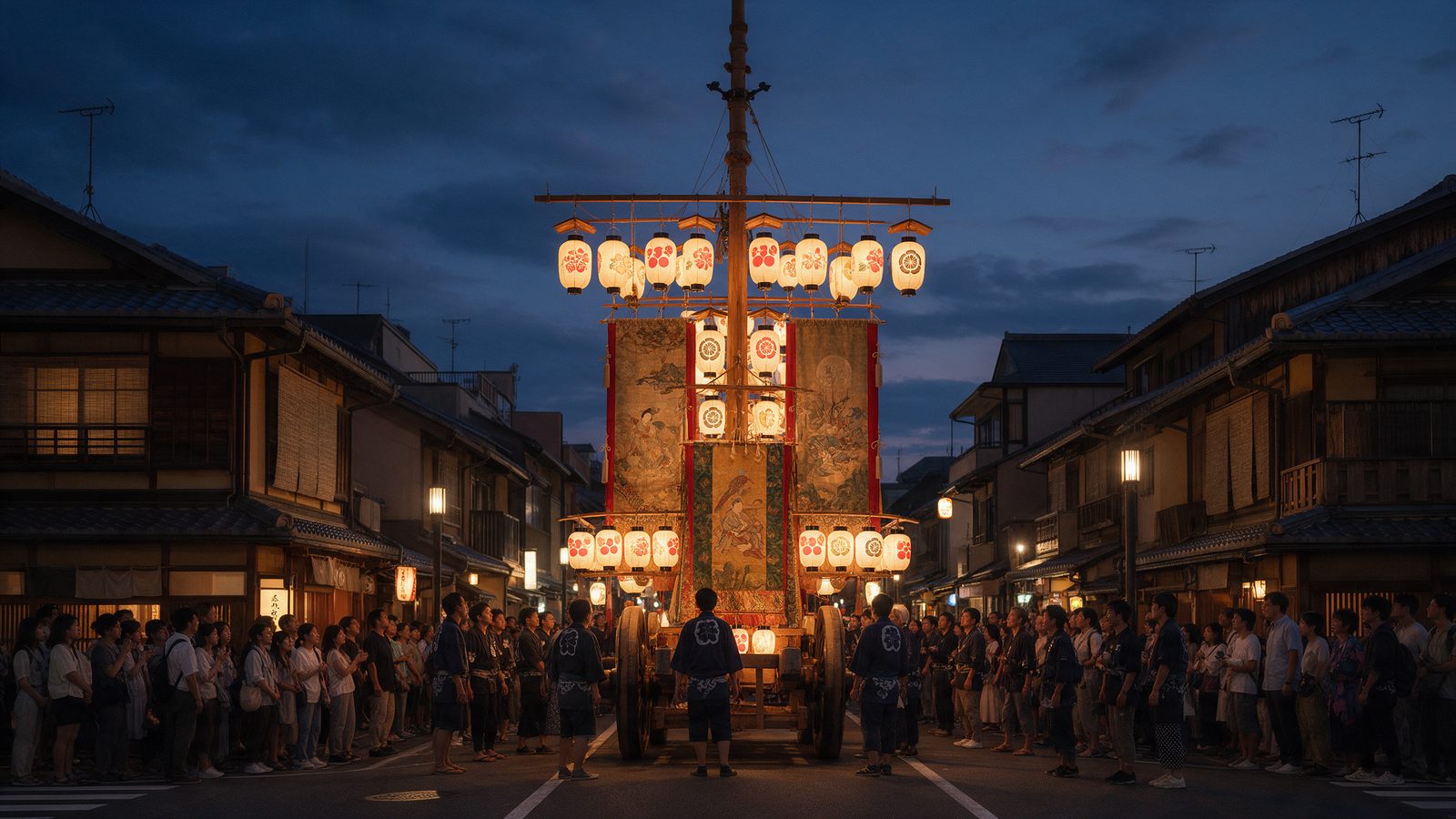
Gion Matsuri, one of Japan's three great festivals, runs the full month of July, with the Yamaboko float processions on 17 and 24 July and the atmospheric Yoiyama evenings in the three nights before each. Central Kyoto hotels around Shijo and Kawaramachi are effectively sold out on procession dates — route late-booking clients to Osaka or Otsu and day-trip them in, or sell reserved paid seating through your ground operator instead of a hopeful spot on the kerb.
Note also that Kyoto's accommodation tax moved to a five-tier structure in March 2026, scaling with the nightly rate — at the luxury end it is now a visible line on the invoice. Our Kyoto private tours guide covers how we build the city crowd-aware; the summer festivals guide covers what else July and August offer, from Tenjin Matsuri in Osaka to the great Tohoku festivals in early August.

Demand and pricing: records, and a reshuffled market mix
The 2026 numbers tell a double story. JTB forecasts roughly 41.4 million international visitors this year — marginally below 2025's record, almost entirely because Chinese arrivals have fallen sharply since late 2025. Meanwhile South Korea has taken the top-market position, and Taiwan, the United States, Southeast Asia and Europe keep growing. For Western and long-haul agents the practical effect is more air seats and more attention on your segment, not less.
Pricing is the counterweight: nationwide hotel average daily rates hit a record ¥23,397 in April 2026, and peak-window compression is real even as headline arrivals flatten. The yen near 161 to the US dollar keeps Japan outstanding value in hard-currency terms — but only for clients whose rooms were actually secured. Allocation, not demand, remains the constraint; the full analysis is in our inbound Japan 2026 trends briefing.
What the trade should action this week
- Re-check ticketing dates on July–August departures against the new ¥3,000 departure tax rule.
- Confirm autumn-leaves files now — November Kyoto and Nikko rooms are already tightening at record rates.
- Open sakura 2027 requests — peak-season hotels work on 12-month lead times; see the cherry blossom planning guide.
- Add typhoon-season flexibility to August–September itineraries: realistic rail buffers and a rebooking clause, which we operate on the ground when weather moves.
- Sell dispersal as the upgrade — Tohoku, Kyushu and the Sea of Japan coast carry lower rates, lighter crowds and stronger margins than the compressed Golden Route.
FAQ
Who pays Japan's new ¥3,000 departure tax and how is it collected? Everyone departing Japan by air or sea from 1 July 2026 — foreign visitors and residents alike — pays ¥3,000, collected automatically inside the ticket fare. Children under two and same-day transit passengers are exempt; tickets issued on or before 30 June 2026 keep the old ¥1,000 rate.
Does the departure tax change DMC land quotes? No. It sits in the air or ferry ticket, so net land rates, hotel pricing and ground services quoted by a Japan DMC are unaffected. Agents only need to reflect it in air pricing and client-facing cost summaries.
Can clients still climb Mount Fuji without a reservation in 2026? Not on the main trails. Climbing now requires an advance online reservation with a ¥4,000 fee, the Yoshida trail is capped at 4,000 climbers per day, and gates close from 2pm to 3am for anyone without a hut booking. A ground operator secures permits, huts and licensed guides as one package.
Is Japan getting too expensive for 2026–27 programs? Hotel rates are at record highs in yen, but the weak yen keeps Japan strong value in dollars, euros and pounds. The real risk is availability, not price — peak-season rooms and rail sell out first, which is why early confirmation through held allocation matters more than rate-chasing.
Want this briefing applied to your own files? Send the itinerary to b2b@explera.jp, message the trade desk on WhatsApp at +66 93 656 8090, or register on the B2B portal. Proposals within 24 hours. IATA 96215733, ASTA member 900408341.