

The festival calendar most agents know has two poles: the summer blockbusters and the winter snow events. Between them, in exactly the months clients already travel for blossom and foliage, sits the richest layer of all — the spring and autumn matsuri, when float towns wheel out their centuries-old treasures and shrines stage the processions that anchor their year. These festivals convert a scenery trip into a cultural one for the cost of a date adjustment.
Spring
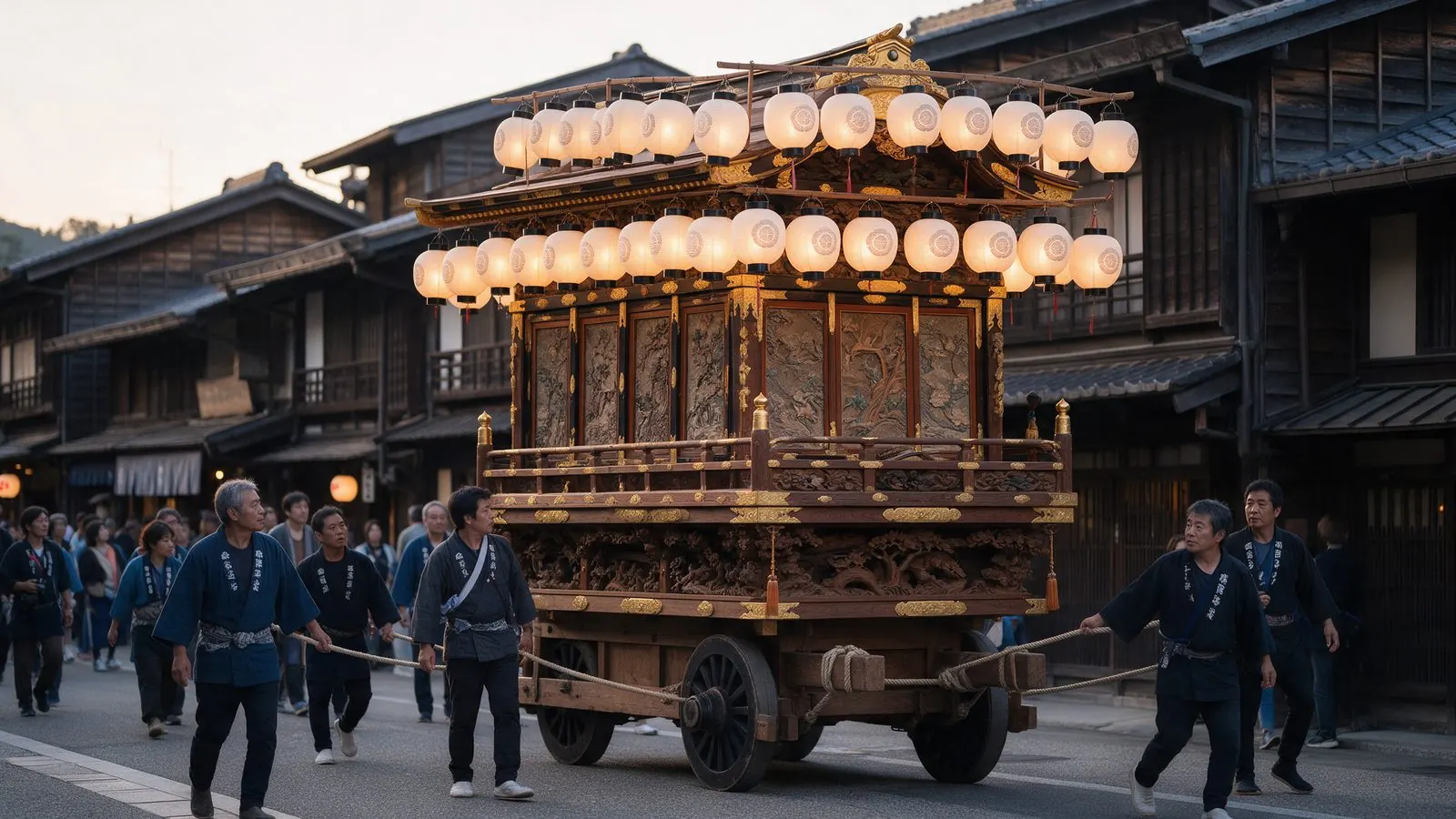
- Takayama Spring Festival (mid-April). One of Japan's three most beautiful festivals: tall gilded floats through the old town, marionette performances on top of them, and a lantern-lit night procession. It coincides with mountain cherry blossom, and Takayama's small inns sell out months ahead — this is the hardest bed of the season outside Kyoto.
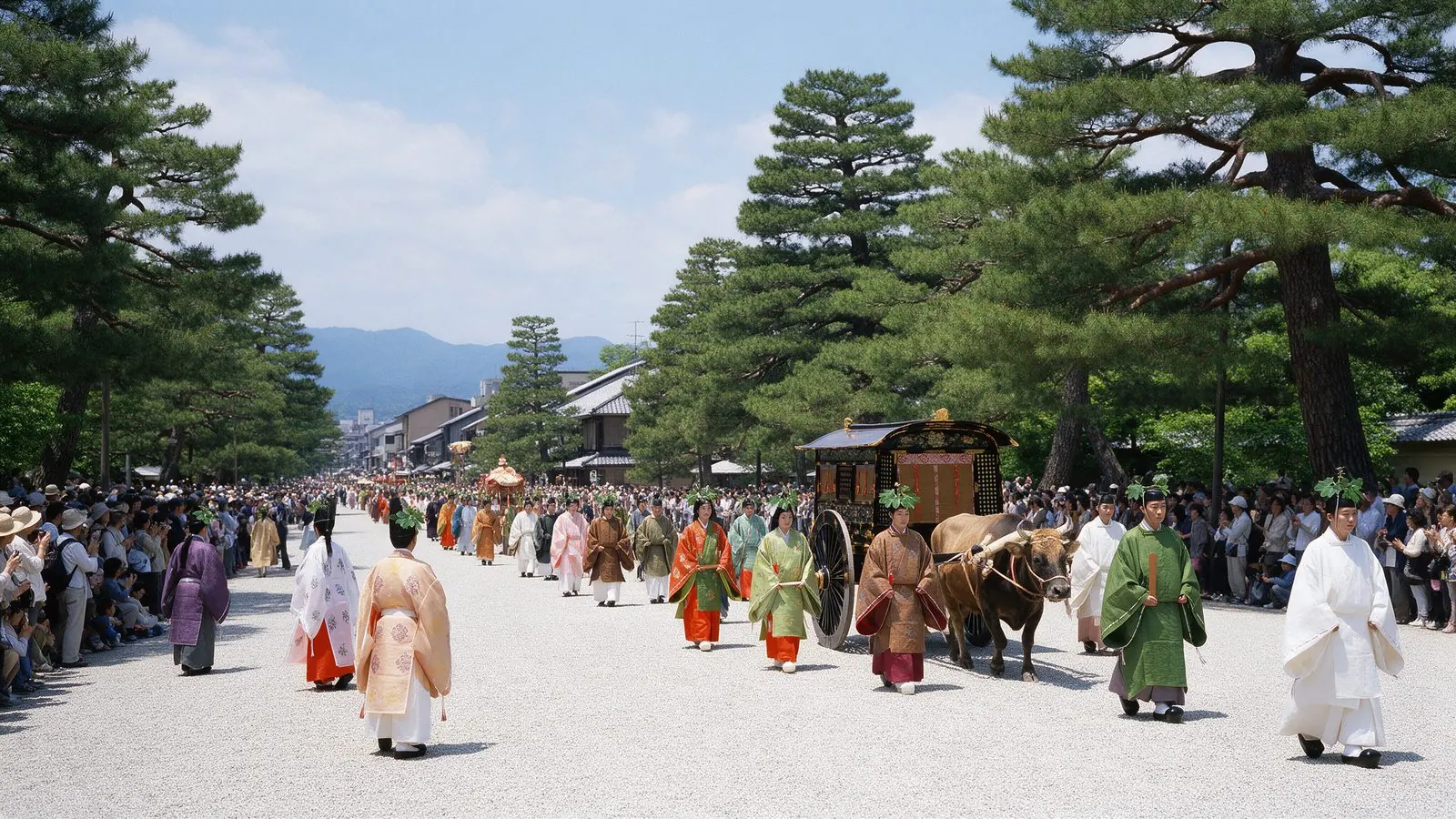
- Aoi Matsuri, Kyoto (mid-May). A court procession in Heian dress from the Imperial Palace to the Kamo shrines — stately rather than raucous, and the easiest major festival to add to a Kyoto stay because it happens in the street, free, in the middle of the day.
- Sanja Matsuri, Tokyo (mid-May). Asakusa's three-day shrine festival: scores of portable shrines carried through packed lanes, the city's most exuberant weekend. No tickets, but hotels around Asakusa tighten.
- Kanda Matsuri, Tokyo (mid-May, odd-numbered years). The alternating partner to Sanja — worth knowing which year the client is in.
Autumn
- Takayama Autumn Festival (early October). The spring festival's twin with its own set of floats, against early foliage instead of blossom. Same warning on beds.
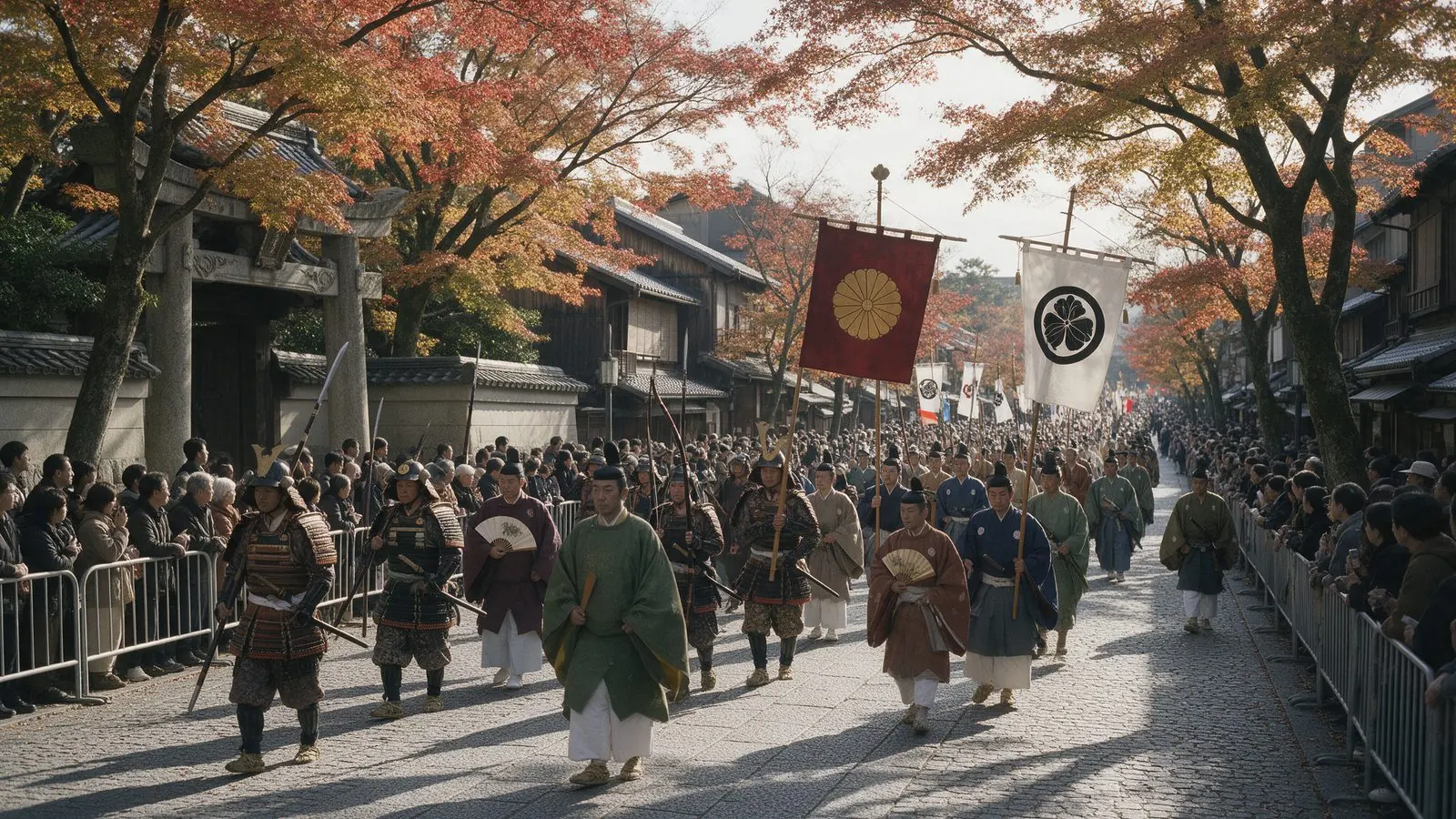
- Jidai Matsuri, Kyoto (late October). The "festival of the ages": two thousand participants in costumes spanning a millennium of history, walking from the palace to Heian Shrine. A pageant more than a party, and an unmatched primer for history-minded clients.
- Kurama Fire Festival (22 October). The same evening in the hills north of Kyoto: pine torches the size of men carried through a mountain village. Spectacular, crowded, standing-room, reached by a small railway that strains under the load — this one needs an operations plan, not just enthusiasm.
- Nada Fighting Festival, Himeji (mid-October). Portable shrines deliberately clashed together — loud, physical, and thrillingly local. Pairs with Himeji castle on the western routing.
- Kishiwada Danjiri, Osaka (September). Multi-tonne wooden floats pulled at a run around corners. Osaka at full throttle.

Why these beat the blockbusters for many clients
- They coincide with prime travel weather — no August humidity, no February cold.
- Most are free street events: the constraint is beds and position, not tickets.
- They are shorter and denser — a half-day of procession folds into a normal sightseeing day, where a summer blockbuster consumes the itinerary.
- They photograph like nothing else — costume, lacquer and lantern light against blossom or foliage.
The full date grid for planning belongs with our events calendar; festival dates hold steady year to year but always confirm the current edition before quoting.
Booking mechanics
- Takayama, both editions: book beds six to nine months out or plan to day-trip from further down the valley.
- Kyoto in late October stacks Jidai, Kurama and peak-foliage demand into one fortnight — treat it like blossom season.
- Paid grandstand seats exist for several processions and are worth it for older clients; they release a few months ahead.
- Kurama needs a logistics decision: go early, accept the crush on the little train, or watch the first hour and leave before the peak. A guide who knows the village's rhythm earns the fee that night.
- Wet weather moves or truncates float festivals — lacquered floats do not go out in rain, so hold the second day as the hedge where the festival has one.

How a Japan DMC handles it
We hold Takayama beds against the festival dates before the itinerary is even signed, position clients on the procession routes with a guide who knows where the floats turn — the corners are the show — book the grandstands where standing is the alternative, and build the rain hedge into float-festival days. Where a client's dates brush a matsuri they did not know about, we say so at quoting: it is the cheapest upgrade in the file.
FAQ
When is the Takayama Festival? Twice a year: mid-April for the spring edition and early October for autumn, each with its own set of gilded floats, marionette performances and a lantern-lit evening procession. Takayama's small inns sell out six to nine months ahead of both editions.
What festivals happen in Kyoto in autumn? Late October stacks two on consecutive themes: the Jidai Matsuri, a two-thousand-person costume pageant spanning a millennium of history, and the Kurama Fire Festival the same evening in the northern hills, with giant pine torches carried through a mountain village. Combined with foliage demand, that fortnight books like blossom season.
Are Japanese festivals ticketed? Mostly no — the great processions are free street events, and the real constraints are accommodation and viewing position. Paid grandstand seats exist for several of the larger processions and suit clients who cannot stand for hours; they release a few months in advance.
What happens to float festivals in rain? The floats usually stay in — centuries-old lacquer and gilt do not go out in wet weather — with processions truncated, moved or shifted to the festival's other day. Where a festival runs two days, holding both in the itinerary is the practical hedge.
Dates brushing a matsuri you did not know about? We check every file — write to b2b@explera.jp, message the trade desk on WhatsApp at +66 93 656 8090, or register on the B2B portal. Proposals within 24 hours. IATA 96215733, ASTA member 900408341.