
Tottori is the quietest prefecture on Japan's main island and the one clients are least likely to have heard of. Its draw is simple and unusual: a wide coastal dune field, a sand-sculpture museum beside it, and a small port town whose main street is lined with bronze spirits from a famous manga. For groups that have done the Golden Route and the big western cities, it is a different texture of Japan.
The dunes
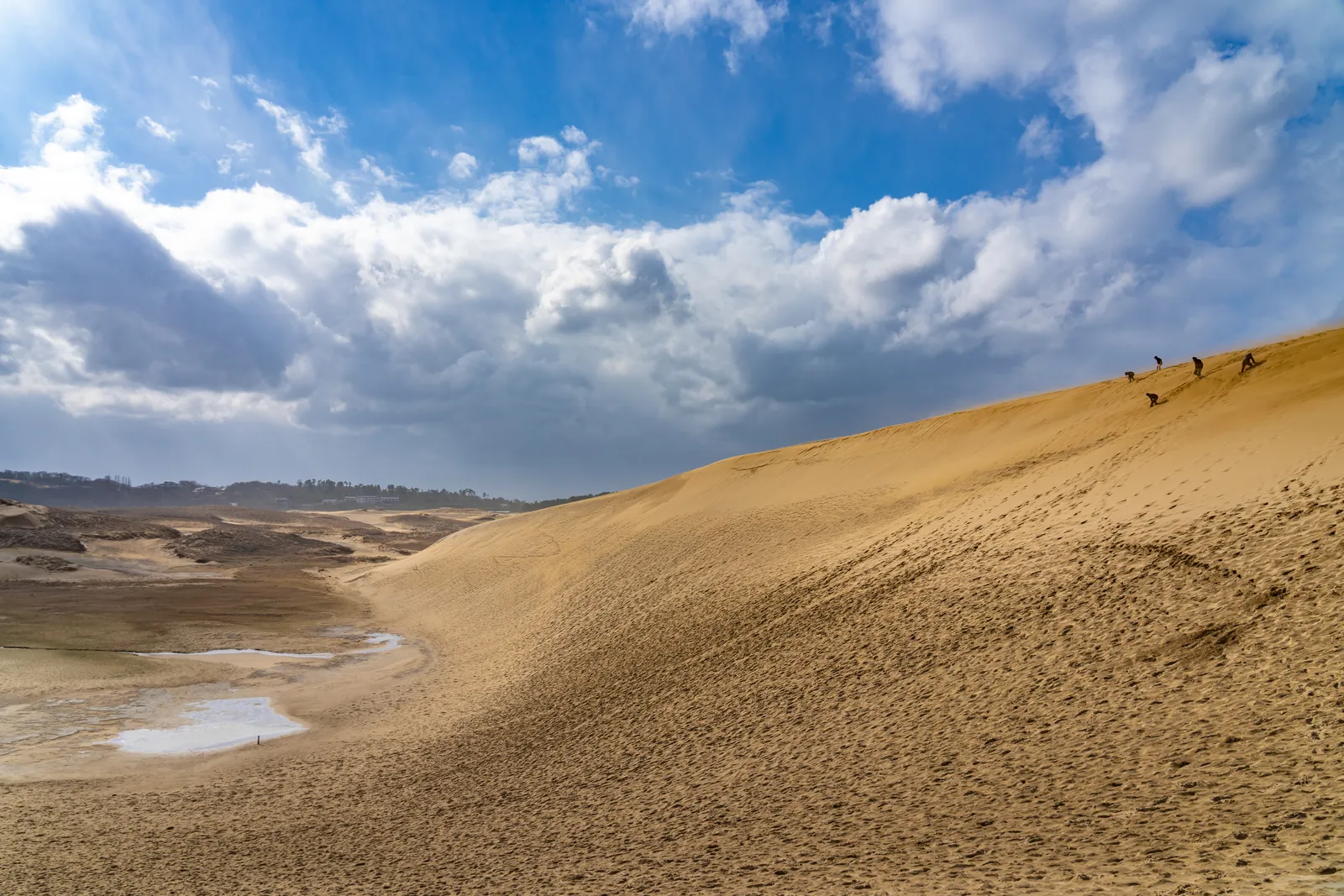
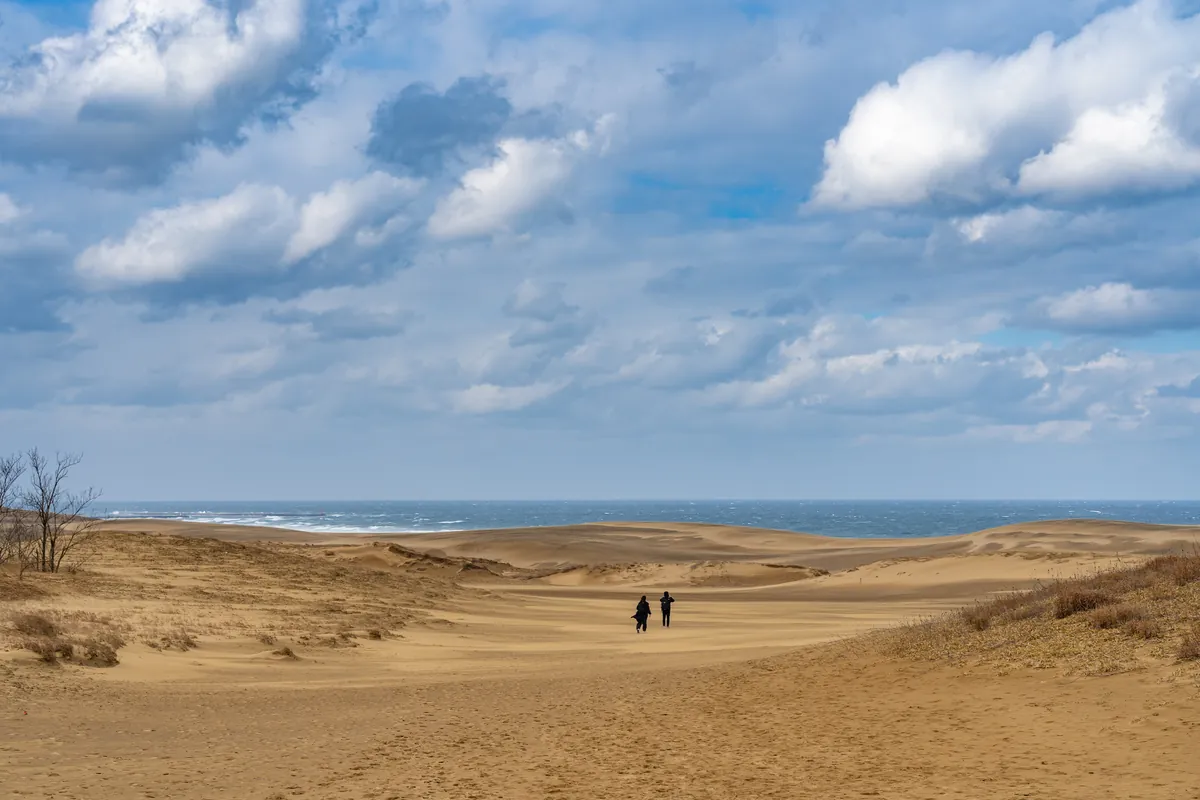
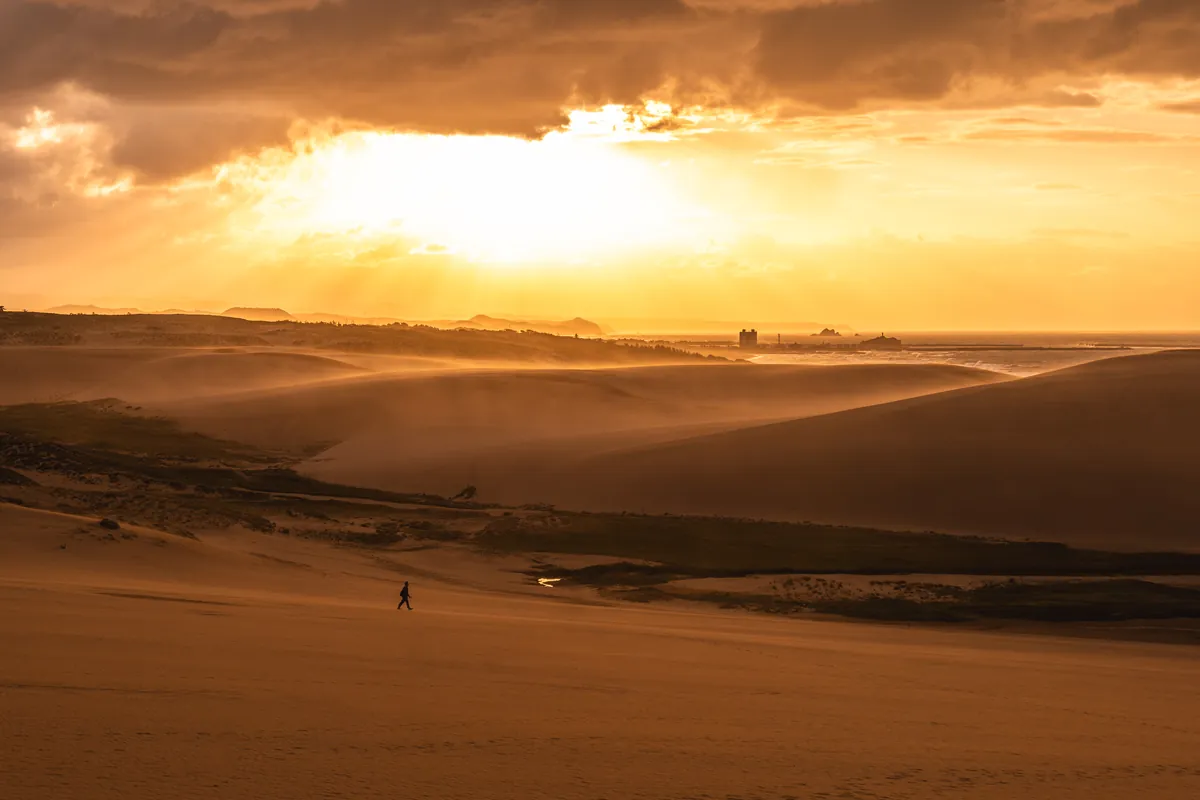
The Tottori Sand Dunes sit on the Sea of Japan coast, about sixteen kilometres long, and are a national natural monument within the San'in Kaigan Geopark. Groups usually walk up the main ridge for the view over the sea, then spend a free half hour on the sand. Footing is soft and the climb is real, so we brief guests on shoes and offer a short, flat alternative for anyone who prefers to watch from the foot of the dunes. Wind and sand can be strong, so cameras and phones need a cover.
The Sand Museum
Beside the dunes, the Sand Museum shows large sculptures carved from sand by artists from around the world, with a new theme each exhibition year. It is a covered, comfortable stop that works well in rain, wind or heat, and it gives a group a reason to be at the dunes at any time of day. It closes between exhibitions each year, from early January to late April, and the theme changes, so we confirm the dates and the current exhibition when we quote.
Sakaiminato and Mizuki Shigeru Road
Sakaiminato, on the coast to the west, was the home town of the manga artist Mizuki Shigeru, creator of Gegege no Kitaro. The Mizuki Shigeru Road is a shopping street dotted with bronze statues of the yokai spirits from his stories, with a museum devoted to his work. It suits families, anime fans and anyone who likes an easy, lively walk. Our anime and pop culture tours guide shows how to pair it with other manga towns.
Mt. Daisen and the coast
- Mt. Daisen. The highest mountain in the Chugoku region, at 1,729 m, with a temple on its slopes, forest walks and, in winter, skiing. Groups usually take the lower trails.
- Winter crab. From about November to March, Tottori is known for its snow crab; it is the main reason winter groups come.
- Pear and seafood. Local pears in late summer and fresh Sea of Japan seafood throughout the year make easy lunch stops.
How we plan it
Tottori is out of the way, so we plan it as a night or two on the way between Kansai and the Chugoku coast, or as a San'in loop with Matsue and Izumo. Limited express trains take about two and a half hours from Osaka and three from Kyoto; Tottori Airport also has flights from Tokyo. Coach days are short and weather is checked the day before. See our Chugoku region guide and our Matsue and Izumo guide.
FAQ
Is climbing the dunes suitable for all groups? The main ridge is steep and sandy. We offer a flat viewing option at the base for guests who prefer not to climb.
Is Tottori only worth visiting in summer? No. The dunes are open all year, the Sand Museum works in any weather from late April to early January, and winter adds the snow crab season.
How long does a group need in Tottori? One night covers the dunes, the Sand Museum and Sakaiminato; add a second for Mt. Daisen or a loop through Matsue.
Want Tottori in your clients' Japan programme? Write to b2b@explera.jp, message the trade desk on WhatsApp at +66 93 656 8090, or register on the B2B portal. Proposals within 24 hours. IATA TIDS 96215733, ASTA member 900408341.