
Explera DMC Japan builds Ibaraki as a day out from Tokyo or a stop on the way north: Hitachi Seaside Park's blue nemophila in spring and red kochia in October, Kairakuen garden in Mito for plum blossom from February, and Fukuroda Falls in autumn colour. Mito is about an hour and a quarter from Tokyo by limited express.
Ibaraki sits just north-east of Tokyo and is the kind of prefecture many clients pass without noticing. For groups with a spare day near the capital, it offers one of Japan's best flower displays, a famous garden and a grand waterfall, all on one rail line and without a long transfer.
When does Hitachi Seaside Park change colour?
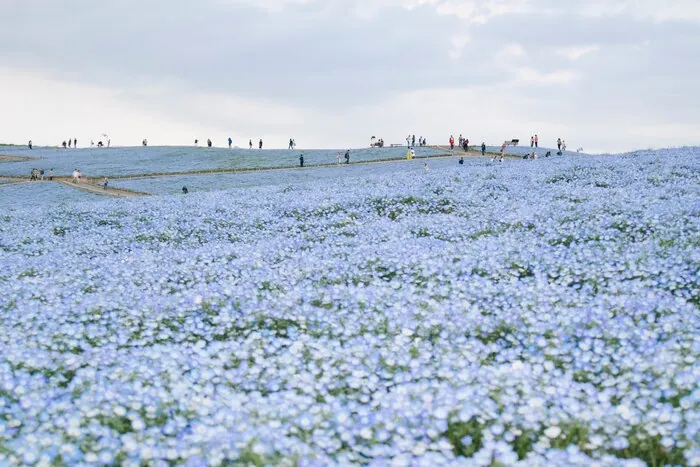
This large coastal park is known for two colour seasons on the same hill, Miharashi no Oka. In spring, usually from mid-April into early May, millions of blue nemophila cover the slope. In autumn the kochia shrubs turn from green to red, normally in mid to late October; arrive before about 10 October and the hill can still be green. Peak days change with the weather, so we watch the park's bloom reports and keep dates flexible. Weekends and the Golden Week holidays are very busy.

Mito and Kairakuen
Mito, the prefectural capital, is home to Kairakuen, ranked among Japan's three great landscape gardens with Kenrokuen and Korakuen. It is best known for its plum trees, about 3,000 of them, which bloom from mid-February into March during the Mito Plum Festival. In other seasons it is a calm green space for a short walk. Our plum blossom guide covers the season in detail.
Fukuroda Falls and more
- Fukuroda Falls. A broad, four-tiered waterfall in Daigo, in the north of the prefecture, about 120 metres high and 73 metres wide, reached through a tunnel to two viewing decks. It is particularly good in autumn colour and can freeze in a hard winter.
- Ushiku Daibutsu. A huge standing Buddha statue near Tokyo, an unusual stop for a group with time.
- Local food. Natto, a fermented-soybean speciality of Mito, and seasonal seafood from the coast.

How we plan it
From Tokyo, the limited express reaches Mito in roughly an hour and a quarter, and Katsuta, the station for the seaside park, in a little longer, with a bus to the gate. Coaches are easier for groups. We usually build Ibaraki as a day out from Tokyo or a stop between Tokyo and Tohoku. See our flower seasons guide and our day trips from Tokyo guide.
Sources: Hitachi Seaside Park (official), Kairakuen (official) and Fukuroda Falls on JNTO's Japan.travel.
FAQ
When is Hitachi Seaside Park at its best? Mid-April to early May for blue nemophila, and mid to late October for red kochia. Check the park's bloom reports close to travel.
Is Ibaraki a realistic day trip from Tokyo? Yes, by rail or coach, though the park and Kairakuen together make a full day.
Is Kairakuen only for plum season? No. It is lovely in other seasons too, but the plum bloom from mid-February is its signature.
Can a coach group combine the park and Fukuroda Falls in one day? It is possible but long, because the falls are inland in the north of the prefecture. For a relaxed pace we pair the park with Mito, and keep Fukuroda for a programme heading on to Tohoku or one with a night in Ibaraki.
Want Ibaraki in your clients' Japan programme? Write to b2b@explera.jp, message the trade desk on WhatsApp at +66 93 656 8090, or register on the B2B portal. Proposals within 24 hours. IATA TIDS 96215733, ASTA member 900408341.